Visual Identity for Product Designers: A Field Guide to Building Systems That Scale
Visual identity is the complete set of visual elements that communicate a brand personality. This guide covers the recognition stack, 5-phase build process, dar
Updated 19 min read
Visual identity is the complete set of visual elements (logo, color palette, typography, imagery, and iconography) that communicate a brand's personality across every touchpoint. Color increases brand recognition by up to 80%, and consistent brand presentation increases revenue by up to 23%. For product designers and developers, visual identity is the design layer that gets encoded as tokens, components, and guidelines for digital systems.
This guide covers visual identity from the designer's angle: the recognition science, the element-by-element system, and the digital-specific requirements (dark mode, WCAG contrast, responsive logo variants). The focus is building an identity that survives handoff to a team.
Key Takeaways
Visual identity is a system (logo, color, type, imagery, iconography) that differs fundamentally from a design system
Color is the fastest recognition signal: the brain processes it in under 100ms, before logo or typography
Design color first, typography second, logo third, the reverse of most small-business practice
Dark mode adaptation, WCAG-compliant palettes, and responsive logo variants are non-optional for digital products
A mediocre identity applied consistently for 18 months outperforms a polished one applied inconsistently
What Is Visual Identity?
Visual identity is the tactical expression layer of a brand: the collection of visual decisions that translate strategy into recognizable signals. Frontify defines it as limited to the creation and execution of a brand's visual aspects. Brand identity goes further: it encompasses verbal identity (voice, messaging, tone), strategic foundation, and all associations a brand builds over time.
The most common misconception across practitioner communities is treating these two as synonyms.
As u/Learnbook28 put it in r/branding: "First of all, visual identity is NOT brand identity. Brand identity is the sum of all associations (visual, auditory, sensory, brand personality, and category entry points) that a brand owner wants to establish in the minds of the target audience. Visual identity is just one part of it."
Why Visual Identity Matters More in 2026
Interest in "visual identity" surged approximately 20× from its 2021 baseline to an all-time peak in February 2026 (Google Trends index: 100). The acceleration began in Q3 2025, driven largely by AI-generated design tools that let founders and small businesses build visual systems faster than ever before. The same tools flooded the market with generic, indistinct identities that look like every other AI-generated brand.
Consistent brand presentation increases revenue by up to 33%, according to a PR Newswire study. The challenge is not building a visual identity; it is building one that holds up across digital contexts: dark and light backgrounds, screen resolutions from 16px favicons to 8K displays, accessibility requirements, and developer handoff. That is where most guidance falls short.
The Recognition Stack: How Visual Elements Register
Before picking colors or sketching logos, understand how humans actually process visual brand signals. Benly.ai's recognition stack, grounded in Journal of Consumer Research data, models visual recognition as a four-layer sequence:
Layer
Processing Speed
Element
Real-World Example
1. Color
Under 100ms
Brand color palette
Tiffany blue, Coca-Cola red
2. Shape
100–200ms
Logo mark, visual forms
Nike swoosh, Apple silhouette
3. Typography
200–400ms
Brand typefaces, wordmarks
Google Product Sans, Netflix custom serif
4. Imagery
400ms+
Photo style, illustration approach
Apple product shots, Airbnb lifestyle
The design implication: every execution (ads, app screens, packaging) should fire as many recognition layers as possible within the first second. McDonald's 2020 campaign ran with no logo and no brand name. Color palette and typography alone were enough for instant identification.
If color is processed first and constrains all other choices, it should be designed first. Benly.ai is explicit: design color → typography → logo → imagery → iconography. Most small businesses do it in reverse: they commission a logo, then force everything else around it.
The Core Elements of a Visual Identity System
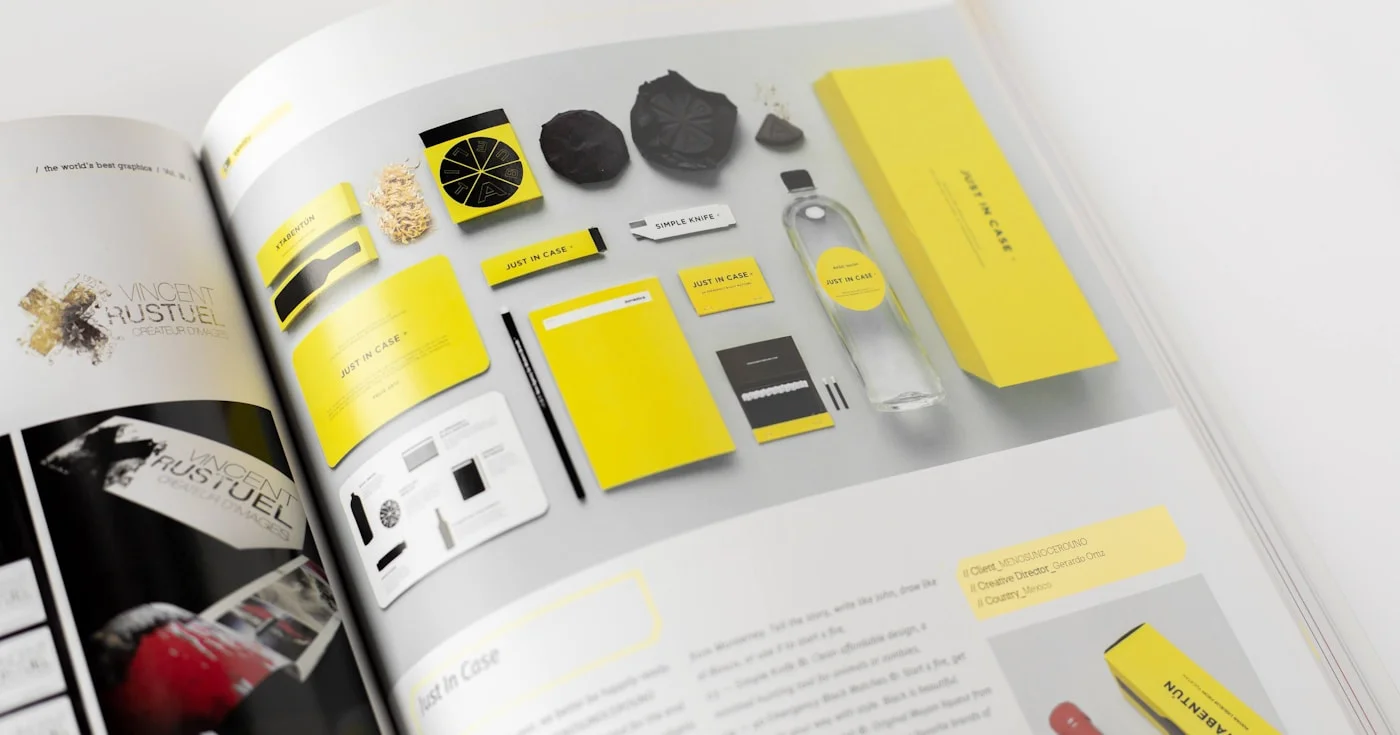
Photo by Brands&People on Unsplash.
Logo: More Than a Mark
A logo is the identity anchor, but its power comes from repetition and system thinking. A complete logo system requires more than a single lockup:
Primary logo (full color with wordmark)
Logo mark (symbol only, for small contexts)
Wordmark (text only)
Monochrome version
Favicon/compact version (recognizable at 16px)
Background-specific variants (light, dark, color)
Every variant needs documented minimum sizes and clear space specifications. Without them, logos get crowded, stretched, or illegible within weeks of launch. Benly.ai notes: "The best logos are simple enough to be recognized at 16 pixels and distinctive enough to stand alone without the brand name."
The Nike swoosh was designed by Carolyn Davidson in 1971 for $35 and is now worth billions, the most-cited argument for investing in great visual identity. Simplicity is the moat.
Color Palette: The Fastest Signal You Own
Color is processed by the brain in under 100ms, faster than any other visual element. Owning a distinctive color in your category is one of the highest-return brand moves available. Tiffany's Pantone 1837 is trademarked; Coca-Cola red is attributed in under 100ms in abstract compositions.
Standard palette structure follows the 60-30-10 rule: primary colors occupy 60% of visual space, secondary colors 30%, accent 10%. Every color must be specified across all color models: HEX (web), RGB (digital), CMYK (print), Pantone (specialized production).
A single color mismatch between your email signature and product UI tells users your brand lacks attention to detail. Spellbrand is direct about this: color inconsistency is the fastest way to signal a brand that is not operating as a system.
For digital products, document WCAG-compliant color combinations alongside HEX codes. This is not optional: accessibility requirements apply to brand color usage the moment your palette appears in product UI. More on this in the Dark Mode section below.
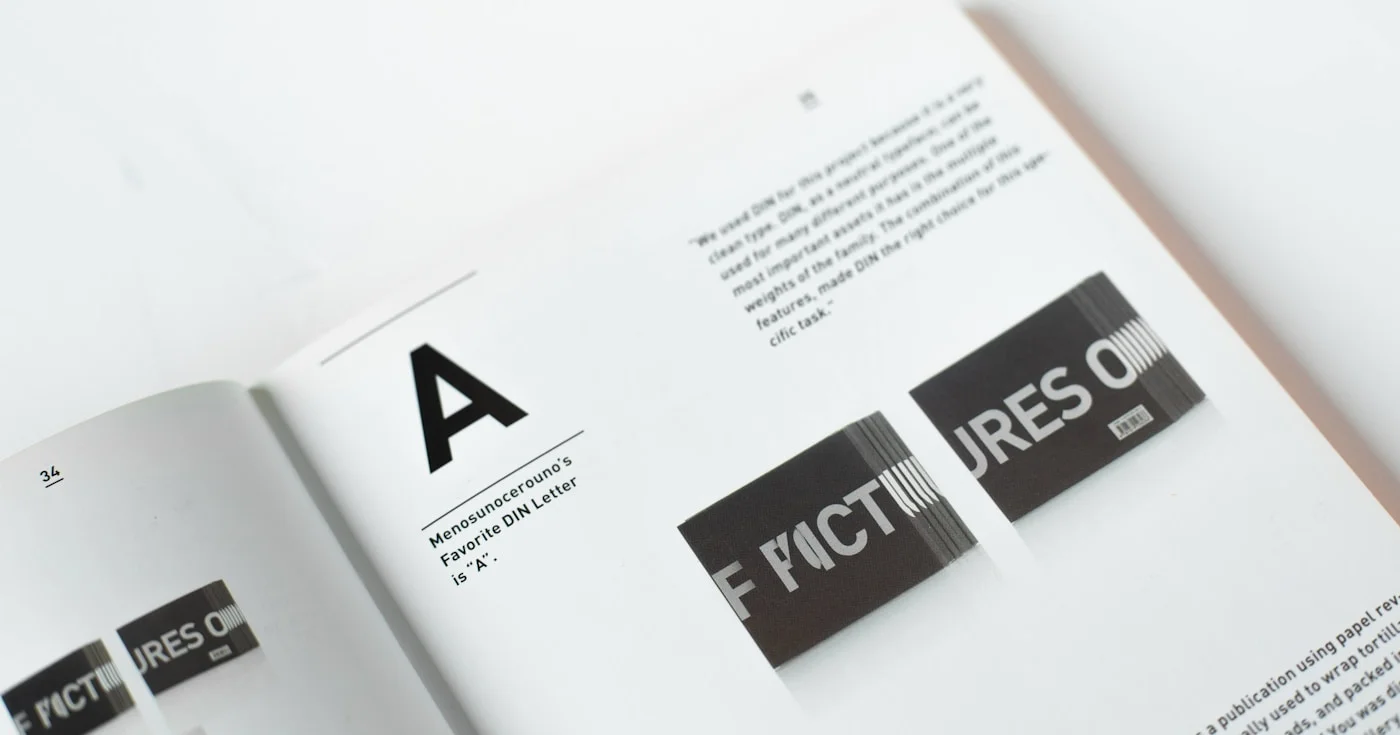
Typography: Voice Before Words
Typography communicates brand personality before a single word is read. As Charles Nix (Senior Executive Creative Director at Monotype) wrote on LinkedIn in June 2026: "Typography isn't supporting the identity. It is the identity."
Typeface personality maps roughly as follows:
Style
Brand Signal
Examples
Serif
Tradition, authority, sophistication
New York Times, Vogue, NPG Serif
Geometric sans-serif
Modern, clean, forward-thinking
Google Product Sans, Airbnb Cereal
Humanist sans-serif
Friendly, approachable
Mailchimp (historically)
Monospace
Technical precision, developer-first
GitHub, many dev-tool brands
Display/decorative
Expressive, distinctive
Mailchimp (post-Collins 2018)
A complete typography system includes: display typeface, body typeface, and UI/mono typeface (critical for digital products). Size hierarchy (H1 → H2 → H3 → body → captions), weight specifications, line-height and letter-spacing rules, and media-specific variants round it out.
Chris Do (@theChrisDo) on X: "Fonts are like friends. It's nice to have a bunch, but you only spend time with a few." Practitioner consensus is clear: a brand anchors to 1–2 typefaces and uses them with restraint.
Notable custom typefaces show what full commitment looks like: Google Product Sans, Netflix's custom serif, Apple's San Francisco, and the National Portrait Gallery's NPG Serif (commissioned from archival materials). Custom typefaces eliminate font-licensing inconsistencies and create a voice unavailable to competitors.
Imagery: The Most Neglected Layer
Imagery is the slowest recognition signal (400ms+) and, according to Benly.ai, "the most frequently neglected identity element and the hardest to maintain at scale."
Imagery guidelines must define: photography style (lighting, composition, color treatment, subject matter), color grading, composition style, illustration approach (if applicable), and mood range. They must also include explicit anti-examples: what to avoid matters as much as what to use, especially when external agencies or non-design teams produce content.
Three contrasting cases show how much this varies: Apple (clean backgrounds, dramatic lighting, tight crops), GoPro (action shots, wide angles, extreme environments), and Airbnb (lifestyle imagery, diverse people, warm natural light). The subject matter is completely different; the consistency within each system is total.
Iconography and Supporting Elements
Inconsistent iconography is immediately noticeable. When a UI uses rounded line icons in one section and filled square icons in another, the visual system reads as broken, even when the user can't articulate why.
A complete icon system specifies: style (line/filled/duotone/isometric: pick one consistently), stroke weight (matched to body font weight), size grid (24px or 32px standard), corner radius (consistent across all icons), and optical spacing. Supporting elements (patterns, grid systems, motion/animation guidelines) are increasingly part of brand expression for digital-first products.
Visual Identity vs. Design System: The Layer Designers Confuse
This is the highest-value distinction for UI Things readers and one entirely absent from the top 20 SERP results.
A visual identity defines what color, typography, imagery, and logo mean for the brand. It answers the brand layer question: what are we communicating, to whom, in what tone?
A design system encodes those decisions as operational infrastructure for product teams: design tokens (color variables, spacing units, type scales), component libraries, accessibility specifications, and developer handoff documentation. The design system is the product layer; the visual identity is the brand layer that informs it.
DesignForce calls the shared visual patterns "category codes" (green for finance, gradients for SaaS, blue for healthcare) and the distinctive elements "brand codes" (a specific color pop, a custom icon style, an unusual composition approach). The design system encodes both; the visual identity defines which codes are yours.
What This Means for Product Designers
When you build a design system for a digital product, you translate visual identity decisions into:
Color tokens: primary, secondary, accent, semantic (error, warning, success), surface, text, all derived from the brand palette, all WCAG-compliant
Type tokens: heading styles, body styles, UI label styles, all derived from the brand typeface hierarchy
Spacing and grid: brand-neutral in most systems, though container shapes and corner radii carry personality
Component library: buttons, cards, inputs, styled to brand specifications at the component level
A visual identity brief that does not specify all-format color models, minimum logo sizes, and WCAG requirements is not ready for design system implementation. The gap between "we have a brand guide" and "our brand guide works as a token spec" is where most product teams get stuck.
Spotify is the clearest example: forest green (#1DB954), Spotify Black (#191414), circular imagery, and the Circular typeface are each generic alone. Together they form a visual language that is instantly and exclusively Spotify. One of the first major tech brands to design dark-mode-first, Spotify built its visual identity as a digital product system, not a print-first document ported to screens.
Building a Visual Identity: The 5-Phase Process
Five separate sources, including Spellbrand, DesignForce, and Jack Watson on YouTube, independently recommend the same sequencing: strategic foundation before any visual work.
Phase 1: Strategic Foundation
Define before you design. This phase produces the inputs every visual decision depends on:
Brand purpose, target audience, values, vision
Competitive visual audit (5+ competitors; identify visual white space: where you can be different)
Brand name, domain, trademark check
Tone of voice document
"Decision filter": what the brand says yes and no to
Jack Watson captured the value of this phase simply: "I always find that the more detailed the strategy is, the easier it actually is to create the visual identity."
His process involves a 40-page strategy document before any pixel is touched. Every subsequent visual decision becomes obvious rather than a taste fight.
Spellbrand is more direct: "Identity without strategy is decoration. Before touching a color palette or font, you need clarity on who you are, who you serve, how you are different, and what you promise."
Phase 2: Design the Visual System (in the Right Order)
Based on the recognition stack, Benly.ai proposes this design sequence, the inverse of common practice:
Color first: highest recognition impact; constrains all other choices
Typography second: complement the color palette's personality
Logo third: designed to work within the established color and type system
Imagery fourth: aligns with color, type, and logo
Iconography last: matches the established visual language
"This sequence prevents the common mistake of designing a logo first and then trying to force-fit everything else around it," Benly.ai notes. For product designers specifically, designing color first also gives you the WCAG contrast requirements before you commit to any specific logo treatment or background palette.
Phase 3: Document as Brand Guidelines
Documentation transforms visual elements into a visual identity system. Without it, the identity will be misapplied within weeks. Brand guidelines must include:
Logo usage rules (do's and don'ts, clear space, minimum size)
Color specs (HEX/RGB/CMYK/Pantone for all palette colors, plus WCAG contrast ratios)
Typography hierarchy and usage rules
Imagery examples AND anti-examples
Voice and tone guidance
Iconography library
Templates for common applications
Embedded or downloadable assets
Jack Watson separates two documents: the brand presentation explains the why behind every design decision, while the brand guidelines is a how-to guide for anyone using the brand. These serve different audiences. Conflating them produces something that is neither useful.
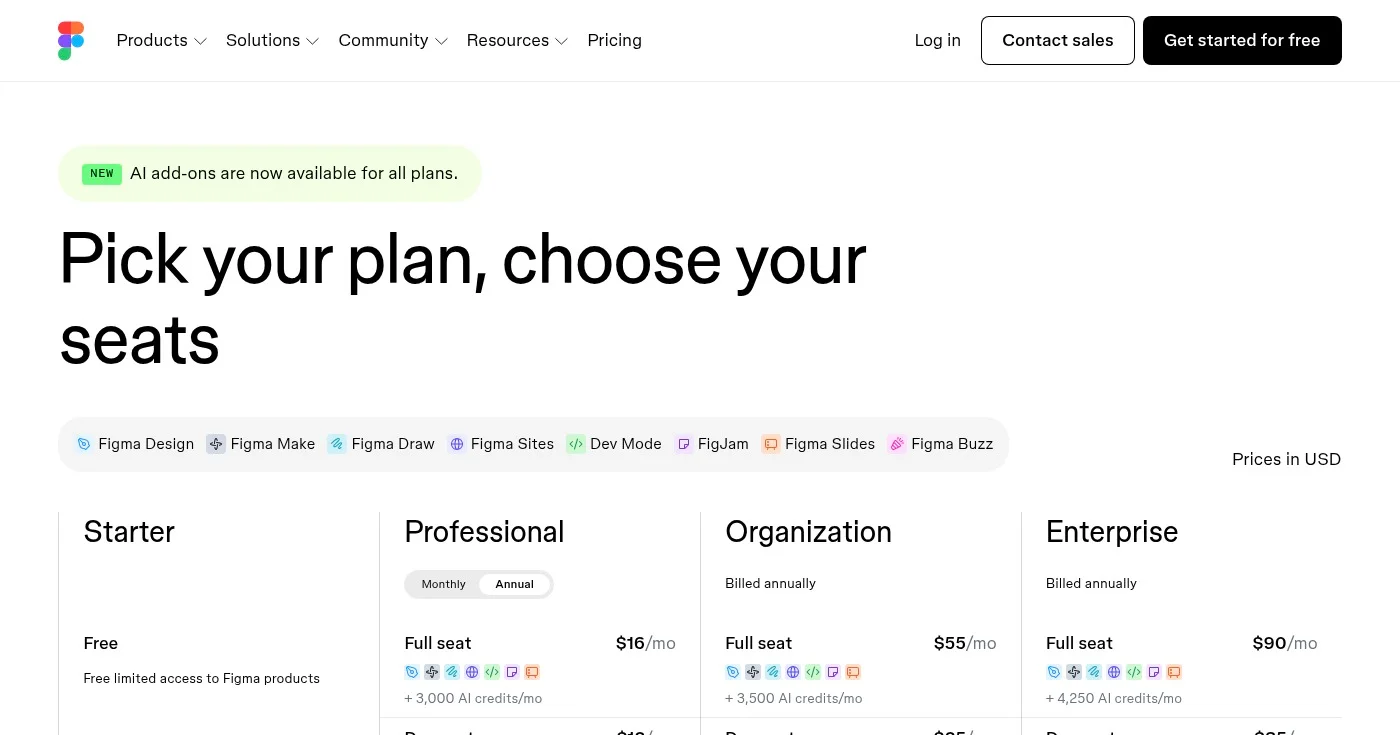
For digital-first teams, Figma (at $16/month per full seat) combined with Notion handles brand guidelines well for small-to-mid-sized teams. Enterprise teams benefit from dedicated brand portals like Frontify or Brandfolder, which add access control, version history, and integration with DAM systems.
Phase 4: Enable Teams and Roll Out
Absent governance breaks brand consistency more often than weak visual design: files no one can find, templates no one uses, and guidelines no one was trained on. Mike Matteo (Chief Typography Officer at Monotype) on LinkedIn: "When the foundations are strong, teams can move faster without compromising the integrity of the brand."
Three operational fixes that make the difference:
Locked templates for non-designers: let marketing, sales, and customer success produce brand-compliant materials without design review
Brand guardian role: someone owns consistency enforcement, not just the initial design
Training across all departments: brand is not a design team concept; it lives in every touchpoint
Bosch had 17 separate sets of brand guidelines and 60 variations of its home icon in use across global touchpoints before centralizing with Frontify. The problem was not the identity; it was the absence of centralized infrastructure to enforce it.
Phase 5: Audit, Measure, and Evolve
Most enterprise brands revisit visual identity every 5–10 years. A quarterly brand consistency audit is the most effective mechanism to catch drift before it erodes recognition. Cover website, ads, social profiles, email templates, landing pages, and packaging, scoring each touchpoint on color accuracy, typography compliance, logo usage, and imagery alignment.
Incremental updates to typography or color can keep a brand current without destroying recognition equity. The brand guide should be a living document: intentional, tested deviation that performs better becomes the new standard; accidental drift that undermines recognition gets enforced away.
Dark Mode, Accessibility, and Responsive Variants
This section is entirely absent from the top 20 SERP results for "visual identity." For product designers and developers, it is not optional.
WCAG-Compliant Color Palettes
Every color combination that appears in product UI must meet WCAG 2.1 contrast requirements: 4.5:1 for normal text, 3:1 for large text, 3:1 for UI components and graphical objects. Document contrast ratios in your brand guidelines alongside HEX codes at the brand specification stage, rather than during design system implementation.
A color-blind-safe palette goes one step further: verify that your primary and secondary colors remain distinguishable for the most common types of color vision deficiency (deuteranopia, protanopia, tritanopia). Tools like Adobe Color's accessibility checker and Stark's Figma plugin test this directly. UI design statistics consistently show that accessibility requirements are expanding, and building them into the brand layer is simpler than retrofitting them component by component.
Dark Mode Identity Variants
Spotify built its visual identity dark-mode-first, a decision that gave it a distinctive visual language before dark mode became an industry default. For any brand launching in 2026, dark mode variants are not a design system concern alone; they are a visual identity specification.
Your brand guidelines must include:
Logo variants for dark backgrounds: the primary full-color logo may need an all-white or reversed version; define which variant is used when and on what background colors
Color palette dark-mode mapping: your primary blue may need to lighten by 20% to maintain the same WCAG contrast ratio on a dark surface that it provides on white
Surface color definitions: background-primary, background-secondary, background-elevated. These are brand decisions, not just design system defaults
Frontify's brand guidelines platform now includes accessibility annotation as a standard feature: accessibility has shifted from a development concern to a brand governance requirement.
Responsive Logo Variants
A logo that works at 600px width does not automatically work at 32px. Responsive logo simplification means removing detail at each breakpoint: the horizontal lockup with tagline → horizontal lockup without tagline → square mark only → favicon. Each breakpoint needs a dedicated SVG or PNG asset (not a scaled-down version of the full logo), with the switching rules defined in the brand guidelines.
For design engineers working on design system implementation, this means the logo component takes a size prop that switches the asset file, not a single image scaled via CSS.
Consistency Compounds: The 18-Month Brand Equity Model
The most consistent practitioner finding across all four community platforms (Reddit, YouTube, X, and LinkedIn) is absent from every ranking SERP guide: consistency outweighs initial design quality.
u/Pretty-Competition31 in r/branding stated it as an economic model: "Brand equity is like compound interest: it builds quietly, then pays off exponentially."
Practitioners in r/branding describe brands that maintain disciplined visual consistency over 12–24 months reporting qualitatively different inbound: customers seeking them out, organic brand mentions, and reduced acquisition friction.
The inverse is also true. 88% of consumers say authenticity from brands is important when deciding which ones to support, according to Nosto research cited by Stripe. Visual inconsistency reads as inauthenticity, even when the individual assets are high quality.
Phil Garnham (Executive Creative Director at Monotype) on LinkedIn: "As AI accelerates the production of content, strong typographic systems become more strategically important, not less. The decisions that shape a brand (proportion, personality, cultural context, and consistency) still require human expertise."
This is the core argument against AI-generated visual shortcuts. A generic Looka logo paired with Canva AI colors, applied inconsistently across touchpoints, pays negative compound interest regardless of how capable the tools are.
Category Codes vs. Brand Codes
DesignForce surfaces a strategic distinction that applies directly to UI Things readers building product experiences:
Category codes are the visual conventions every competitor uses: green for finance, gradients for SaaS, blue for healthcare. They are necessary for legibility: users immediately understand what kind of product this is. A design system built entirely on category codes produces a recognizable but forgettable product.
Brand codes are unique distinctive elements that belong exclusively to you: a specific color pop no one else owns in your category, a custom icon style, an unusual composition approach. The goal is "familiar enough to be understood, distinctive enough to be remembered."
For product designers, this maps directly to UI kit selection. Starting from a category-code-heavy base kit gets you to 80% of expected visual patterns fast; the remaining 20% (the brand codes) is where the identity work happens. The design system encodes both layers as tokens and components, but the visual identity specification defines which codes are distinctively yours.
Common Visual Identity Mistakes to Avoid
Designing the Logo Before Strategy
The most common and most expensive mistake: a logo designed without strategic clarity produces aesthetically competent work that does not serve business objectives. Strategy answers the questions the logo cannot: who you are, who you serve, how you are different, what you promise. Without answers, every visual decision becomes a taste fight.
Ignoring the System
A logo without guidelines is decoration. According to Frontify's brand guidelines research, logo misuse is the most visible form of brand inconsistency. Without documented rules, logos get altered, stretched, or applied incorrectly within weeks of launch, and misapplication accelerates when there is no accessible documentation, no locked templates, and no brand guardian.
Following Trends Without a Lifespan Plan
Visual identities must last 5–10 years minimum before a major refresh. Designing for the trend of 2025 means a redesign by 2027. Airbnb's 2014 Bélo rebrand (flat, minimal, icon-driven) was built for a decade; Mailchimp's 2018 rebrand by Collins was built to break from SaaS visual tropes, not follow them.
Skipping Dark Mode and Accessibility
For any digital product, a visual identity that specifies colors only in CMYK and Pantone without WCAG contrast ratios or dark-mode variants is unusable as a design token spec. This is the gap between a traditional branding deliverable and one built for product designers.
Treating Identity as a One-Time Project
Brand identity requires quarterly audits and intentional evolution. The brand guide is a living document. Bosch's 17 guidelines sets did not emerge overnight: they accumulated through years of undocumented incremental drift.
Measuring Brand by Whether the Founder Likes It
The brand exists in the customer's mind. u/drewcandraw in r/branding: "The brand they are paying for and cultivating is for their customers."
Visual identity decisions should be tested through distinctive asset research: measuring whether target audiences correctly attribute color, shape, and logo mark to the brand, not through internal preference.
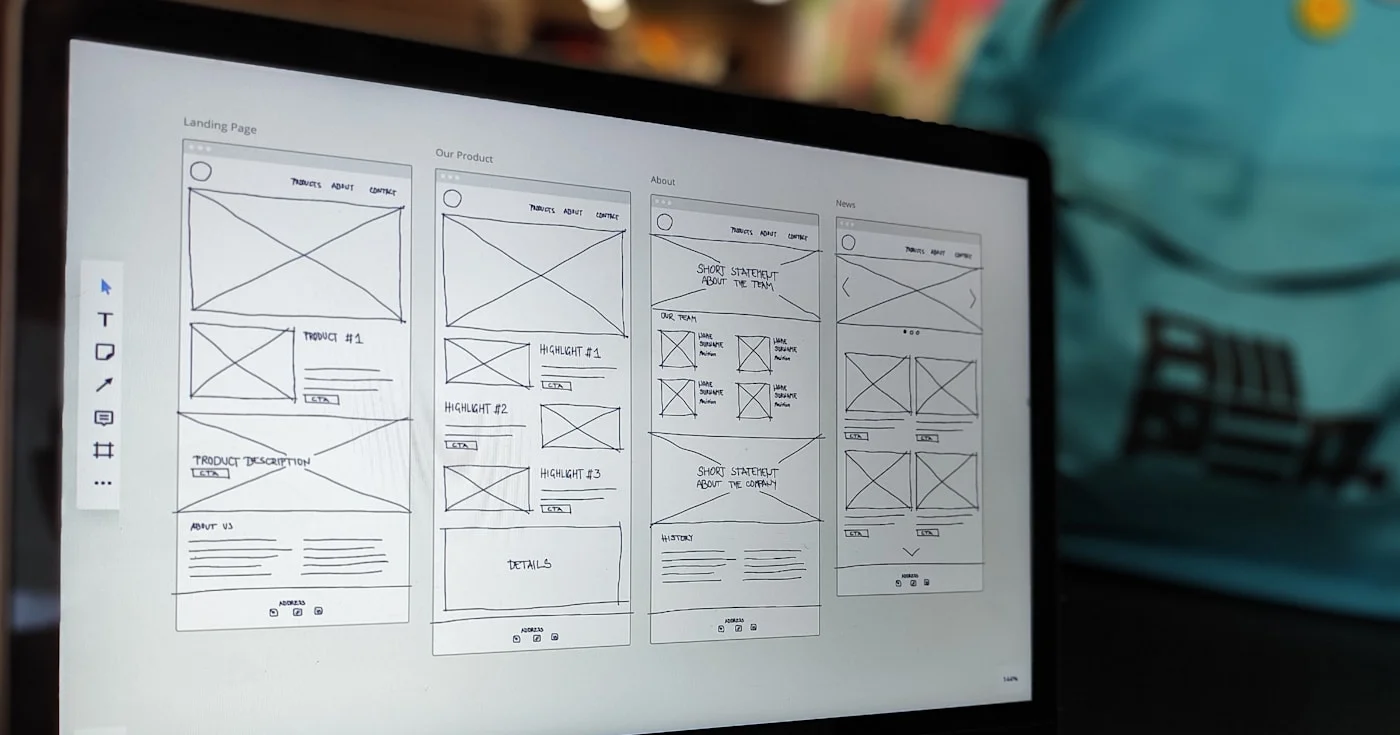
For most product design teams, Figma handles both the identity design and the design system documentation. A Figma brand file (logo frames, color styles, type styles, icon sets) feeds directly into a Figma design system library, with no translation layer needed.
Startup Minimum Viable Brand Identity
Before scaling to a full brand platform, Spellbrand recommends a minimum viable identity (MVB) that enables consistent production without a complete system:
1 logo + 1 secondary mark
3 colors (primary, secondary, accent), all WCAG-compliant
2 typefaces (1 headline, 1 body)
1-page brand guide covering the basics
1 clear positioning statement
Spellbrand: "Every piece of marketing you create without a system becomes technical debt. You will redesign it later. You will pay twice for work that should have been done once."
Even the MVB must include dark-mode logo variants and HEX codes for all three colors, or it is not usable for a digital product out of the box.
A complete guide to design engineering in software: what the role is, core skills, tools, salary data, career paths, and how companies like Vercel structure the
Master email design with this complete guide. Learn the key elements, best practices, layout principles, responsive techniques, accessibility, and the best tool