
49 UI Design Statistics for 2026
49 UI design statistics covering ROI, mobile, accessibility, AI, and designer salaries for 2026.
Updated 10 min read
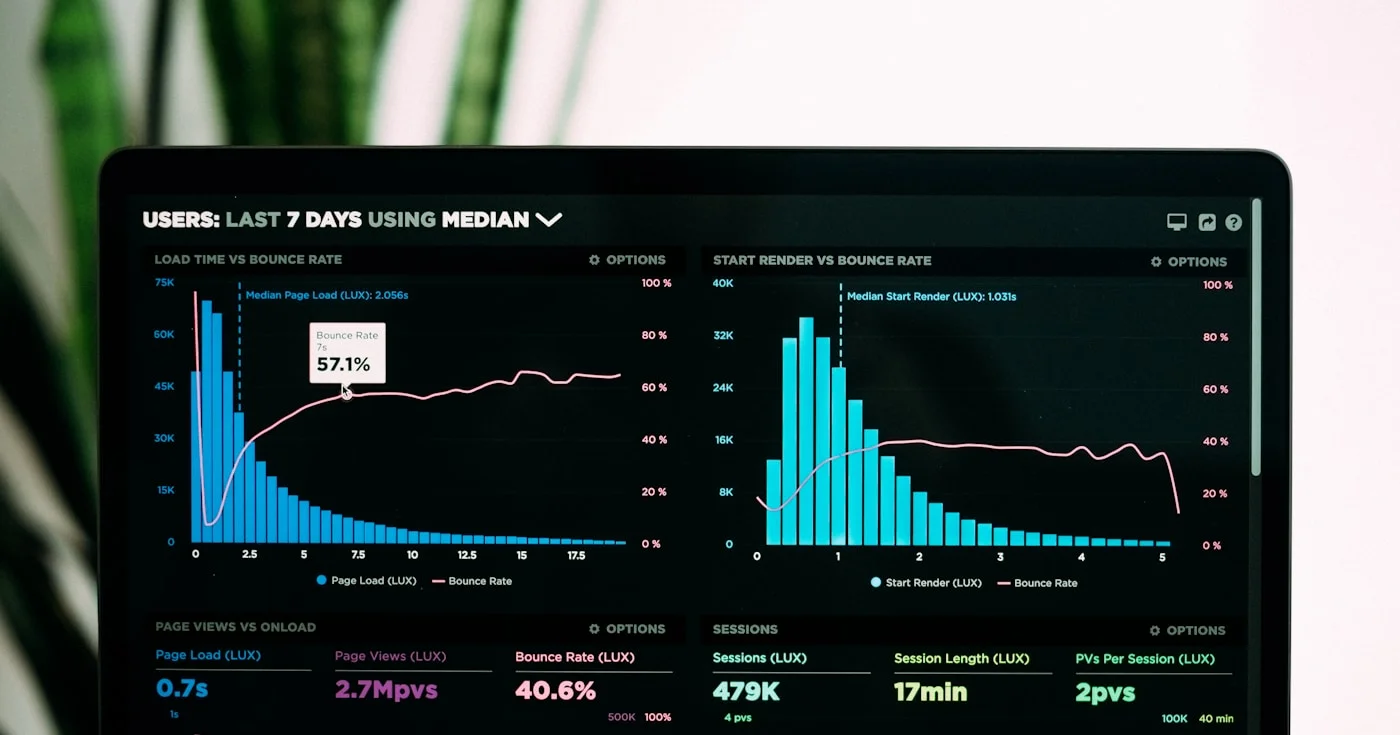

49 UI design statistics covering ROI, mobile, accessibility, AI, and designer salaries for 2026.
Every $1 invested in UI/UX design returns $100, a 9,900% ROI documented by Forrester Research. Design-led companies have outperformed by 228% over a decade against the S&P 500, while 88% of users say they won't return to a site after a bad experience. Whether you're building a business case for UX investment or benchmarking your field, these numbers make the case.
In this guide, you'll find the most current UI design statistics organized by theme, with sources linked inline.
The UI design industry is expanding rapidly, driven by rising demand for digital products, AI integration, and the growing complexity of user interfaces. These figures show where the market is now and where it's heading.
1. The global User Interface (UI) Design Market stood at USD 3.21 billion in 2026, and analysts project it will reach USD 11.31 billion by 2035, growing at a 15.01% CAGR.
2. A separate segment projection estimates the UI/UX design market will hit $11.66 billion by 2031, driven by a 32.05% CAGR through that period.
3. The graphic design market is projected to pass $56 billion by the end of 2025, according to the NMSC. This includes visual design disciplines closely tied to UI work.
4. The generative AI design sector is forecast to grow 18x its current size in the next 10 years, from $741 million to $13.9 billion, reshaping how interfaces are created.
5. Employment for web and digital interface designers is projected to grow 7% from 2024 to 2034, a rate described by the Bureau of Labor Statistics as "much faster than average."
6. About 14,500 openings for web developers and digital designers are projected each year, on average, over the next decade.
7. At the end of 2025, there were over 1.38 billion websites in existence, with a new site launching every three seconds, creating sustained demand for UI design work.
Investment in UI design consistently outperforms other business expenditures. The data below covers revenue growth, competitive performance, and the compounding cost of skipping good design early.
8. Every $1 invested in UX design returns $100, a 9,900% ROI, according to Forrester Research. This figure has become the standard benchmark for justifying design budgets.
9. A well-designed user interface raises conversion rates by 200%, while a superior user experience increases them by up to 400%, per Forrester data.
10. Companies with top design scores achieved 32% faster revenue growth and 56% higher total returns to shareholders compared to their industry peers, according to McKinsey's tracking of 300 companies.
11. Design-centered companies outperformed by 228% against the S&P 500 over 10 years, as documented by the Design Management Institute's Design Value Index.
12. A 10% more UX investment can drive conversion rates up by as much as 83%, according to the Interaction Design Foundation.
13. Staples experienced a 500% revenue increase following a UX-focused site redesign, cited by the Baymard Institute as a leading case study in design ROI.
14. 86% of buyers say they will pay more for a great customer experience, per PwC's Future of Customer Experience survey. That premium is directly connected to the quality of your UI.
15. 42% of organizations reported a 10-30% increase in UX expenditure last year, while 30% increased by more than 30%, per Userlytics' State of UX 2025 survey of over 100 UX professionals worldwide.
16. Redesigning the checkout experience can lift conversion rates by an average of 35.26% for large e-commerce sites, making checkout UX one of the highest-leverage design interventions available.
UI design doesn't get a warm-up period. Users form opinions in milliseconds, and those impressions are nearly impossible to reverse. These statistics show how quickly the brain processes design and what's at stake in the first few seconds.
17. Users form an opinion about a website in 0.05 seconds (50 milliseconds), according to peer-reviewed research by Lindgaard et al. published in Behaviour & Information Technology.
18. 94% of initial judgments about a digital product are based on visual design elements like layout and color, not content, per Nielsen Norman Group's analysis of automaticity research.
19. 88% of users say they are less likely to return to a site after a bad user experience, according to Toptal's UX Statistics and Insights research.
20. 75% of consumers judge a company's credibility based on its website design alone, according to Stanford University's Web Credibility Research.
21. 79% of users scan content rather than read it line by line, according to Nielsen Norman Group. This directly shapes how you should structure UI hierarchy and information density.
22. High-quality visuals are 74% faster encoded in the human brain than text, per Canva's neuroscience research. This is why image choice and visual weight are not cosmetic decisions.
With mobile now generating the majority of digital traffic and purchases, mobile-first isn't a design philosophy anymore. It's a baseline. These numbers show how large the mobile UX gap still is.
23. 63% of web traffic comes from mobile devices in 2026, according to Statista mobile internet traffic data.
24. Mobile devices accounted for 51.4% of spending in October 2025, up 11.6% year over year, per Adobe Analytics.
25. During Cyber Week 2025, mobile accounted for 80% of traffic and 70% of all orders globally, per Salesforce data.
26. 53% of mobile users abandon a site if it takes more than 3 seconds to load on a mobile connection, according to Google's "The Need for Mobile Speed" study.
27. The average mobile bounce rate rose 54% in 2025, with half of all mobile users now exiting after viewing just one page, per FullStory.
28. Mobile users are 5x more likely to abandon a task if a site isn't mobile-optimized, according to Toptal research.
29. The average mobile conversion rate sits at 2.1%, compared to 4.3% for desktop, per Monetate's e-commerce benchmark data. Closing that gap is where mobile UI optimization delivers the biggest revenue impact.
30. The median mobile homepage now weighs 2,362 KB, a 202% increase compared to 2015, making performance-conscious UI design more critical than ever.
Page speed is a UI design variable, not just a developer concern. Decisions about image sizing, animation, layout complexity, and render sequence all have measurable impact on load time and, by extension, revenue.
31. Each additional second of page load time costs 7% in conversions, according to widely cited Akamai and Google research published in the Google mobile speed study. A slower interface isn't just a frustration; it's a revenue leak.
32. Sites that load in 1 second convert 3x better than those that take 5 seconds to load, according to WPO Stats case study analysis.
33. A 1-second delay in app loading time can erase 20% of sales, making sub-second performance a design and engineering priority in consumer-facing products.
34. A Walmart analysis found a direct correlation between improved loading times and revenue, with a 2% increase in conversions for every second of page speed improvement.
35. 39% of users stop engaging with content when loading time is too long, per Adobe research. Content that loads slowly isn't just annoying; it's invisible.
36. In 2025, 48% of mobile websites achieved a "Good" score on Core Web Vitals for the first time, according to the HTTP Archive Web Almanac. That means more than half still deliver suboptimal mobile performance experiences.
Accessibility is the largest unresolved issue in UI design. The numbers below show the scale of the compliance gap, the legal risk, and the business opportunity that accessible design represents.
37. 95.9% of home pages had detected WCAG 2 failures in 2026, up from 94.8% in 2025, reversing a modest trend of year-over-year improvement.
38. About 1.3 billion people, or 16% of the world's population, live with a disability that affects daily life and online access, according to the World Health Organization.
39. Low contrast text remains the most persistent accessibility failure, affecting 79.1% of homepages analyzed in the WebAIM Million 2025 report.
40. 5,114 ADA lawsuits were filed in 2025 alone related to digital accessibility failures, per UsableNet's 2025 Year-End Digital Accessibility Lawsuit Report. The legal exposure is no longer theoretical.
41. The average number of detectable accessibility errors per homepage dropped 10.3% year over year since 2024, according to WebAIM. Progress is real, but with 95.9% of pages still failing, the pace needs to accelerate.
42. Globally, businesses could unlock $13 trillion in market opportunity by fully serving users with disabilities, per Accenture's Disability Inclusion research.
43. Inclusive design boosts usability by up to 30% for all users, not just those with disabilities, because the same improvements that reduce barriers also reduce friction for everyone.
AI is shifting from experiment to infrastructure in design workflows. The data shows high adoption, meaningful speed gains, and unresolved questions about quality and trust.
44. 85% of designers and developers say AI will be essential to their future success, per Figma's 2025 AI report.
45. 78% of professionals say AI tools significantly speed up their workflows, though only 58% say those tools improve the quality of their work.
46. 86% of global creators now use generative AI in their work, per Adobe's 2025 Max survey. This signals that AI is no longer a niche tool in creative fields.
47. 85% of marketers and creatives report saving roughly four hours per week thanks to GenAI tools, per Canva's 2025 Marketing AI Report.
48. The share of agentic AI projects in design doubled to 51% (from 21%) between 2024 and 2025 among Figma users, signaling a shift from generation to automation.
49. 40% of designers and developers don't yet trust AI-generated design outputs enough to rely on them fully, highlighting a gap between adoption speed and confidence in AI-assisted work.
The data points to three compounding pressures that are reshaping UI design in 2026.
First, the business case for design investment has never been stronger. A 9,900% ROI and 228% outperformance versus the S&P 500 over a decade give you quantitative language for budget conversations. Every design decision is a financial decision, and the numbers are on your side.
Second, mobile UI has moved from "important" to non-negotiable. With 63% of web traffic on mobile and a 2.1% mobile conversion rate versus 4.3% on desktop, the gap is wide and the stakes are high. Performance, touch targets, and load speed are where most mobile UI gaps compound into lost revenue.
Third, accessibility compliance is a legal and commercial emergency for most teams. If 95.9% of homepages fail WCAG standards, most sites are both leaving a $13 trillion market on the table and accumulating legal exposure. Accessibility improvements that start in the design phase cost a fraction of remediation later.
UI design statistics consistently show that investment in design is one of the highest-return decisions a business can make.
With a 9,900% documented ROI, mobile traffic now exceeding 63% of visits, and 95.9% of homepages still failing basic accessibility standards, the gap between design-led companies and the rest is widening. The teams that close that gap first will own the compounding advantages.

45 website builder statistics for 2026 covering market size, platform market share, small business adoption rates, AI builder growth, and Core Web Vitals perfor
