
The Complete Guide to Design Engineering (2026)
A complete guide to design engineering in software: what the role is, core skills, tools, salary data, career paths, and how companies like Vercel structure the
Updated 13 min read


A complete guide to design engineering in software: what the role is, core skills, tools, salary data, career paths, and how companies like Vercel structure the
Design engineering is the discipline that bridges visual design and software engineering, producing UI that ships without losing fidelity in the handoff.
As Natalya Shelburne defines it, design engineering "finesses the overlap between design and engineering to speed delivery and idea validation."
The role has gone by many names: UX engineer, UI engineer, design technologist, creative technologist.
In 2024, the industry converged on a single title. This guide covers what design engineers do, the skills and tools you need, how the process works, and where the role is heading in 2026.
If you're a designer who wants to code, an engineer who wants more design taste, or a team lead trying to eliminate the handoff problem, this guide gives you the complete picture.
Design engineering is the practice of operating in the overlap between design and code. A design engineer is fluent in both languages and translates between them without losing fidelity. They're not just good at both. It's a distinct discipline.
The definition from designengineer.xyz: "Design Engineers operate in the overlap between design and code. Fluent in both languages, they translate between them without losing fidelity."
In a software context, design engineering has nothing to do with mechanical or product engineering. You won't find CAD models or stress analysis here. The role focuses entirely on the visual, interactive, and systemic layer of digital products.
Most web projects don't fail because the design is bad. They fail because the moment design is "done," everyone assumes the hard part is over.
According to Shakuro, developers are routinely left guessing how components behave with longer content, at different screen sizes, or in edge cases. They improvise. Visual intent gets diluted. By launch, the product no longer matches the original idea.
Design engineering solves this structurally. By having someone who can operate in both Figma and a codebase, the handoff stops being a handoff.
In 2024, more than 10 leaders published formal discourse on design engineering, including essays, handbooks, and dedicated job boards like designengineer.io. The role went from quietly practiced to officially recognized.
The design engineering process isn't sequential. It's overlapping. Designers and design engineers don't work in independent sprints, handing off when each phase is complete. They iterate together from idea to production.
From the Design Engineering Handbook by Shelburne, Oduye, Williams, Lou, and Litherland, the core principles driving every design engineering decision are:
Does the product create meaningful value for users? Design engineers ask this question when scoping whether a feature is worth building at all. Some animations are unnecessary because they're not the main focus. Knowing the difference saves time and prevents shipping noise.
Can users accomplish their goals efficiently? Design engineers think about edge cases from a user perspective, challenge technical assumptions when they harm the experience, and understand that the most elegant technical solution may not always be the best one.
Can the engineering team build this? Design engineers consult on implementation cost versus experience impact during design itself, before a line of code is written. This prevents designs that look great in Figma but are impossible to implement at production quality.
Does the product direction align with business objectives? Design engineers who understand the product roadmap make better component decisions. A reusable component library is a long-term investment. A one-off animation is not.
The process in practice follows a loop: prototype in code, test with real users, iterate, document in the design system. Repeat. The Design Engineering Handbook describes this as applying rapid prototyping and collaborative workflows that make design and engineering phases overlap rather than stack.
Design engineers need both technical and design skills. Neither side alone is sufficient.
You need strong foundations in spacing, typography, color, and grid. Adobe's design team describes the role as solving problems in "that fertile, liminal space at the intersection of the design and engineering disciplines." If your UI work isn't polished, the code you ship won't be either.
HTML, CSS, and JavaScript are the foundation. Most design engineering roles today require proficiency with React for component-based UI, Tailwind CSS for utility-first styling that maps cleanly to design tokens, and Git for version control and design system contribution.
Design systems are the primary artifact design engineers maintain. Per UXPin, this includes curating and maintaining a centralized repository standardizing UI components and design guidelines, coordinating across both design tools and engineering frameworks.
Design engineers prototype across fidelity levels: from wireframe to code. Vercel's design engineering team specifically notes that animations, keyboard controls, and touch interactions are better prototyped in code than rebuilt from Figma, because the code prototype becomes the production implementation.
Design engineers at Vercel cite accessibility as a core concern from day one, not an afterthought. Vercel's team includes semantic markup, keyboard navigation, support for assistive technology, and respecting user preferences like reduced motion.
Strong design engineers think in systems, not components. According to Paraform, the best design engineers visualize how changes in one component ripple through an entire design, consider how designs adapt across screen sizes, and think about long-term design system maintenance implications from day one.
Vercel's design engineering team published one of the most detailed accounts of what the role looks like inside a real product company. The team includes Rauno Freiberg, Jhey Tompkins, Henry Heffernan, and others (March 2024).
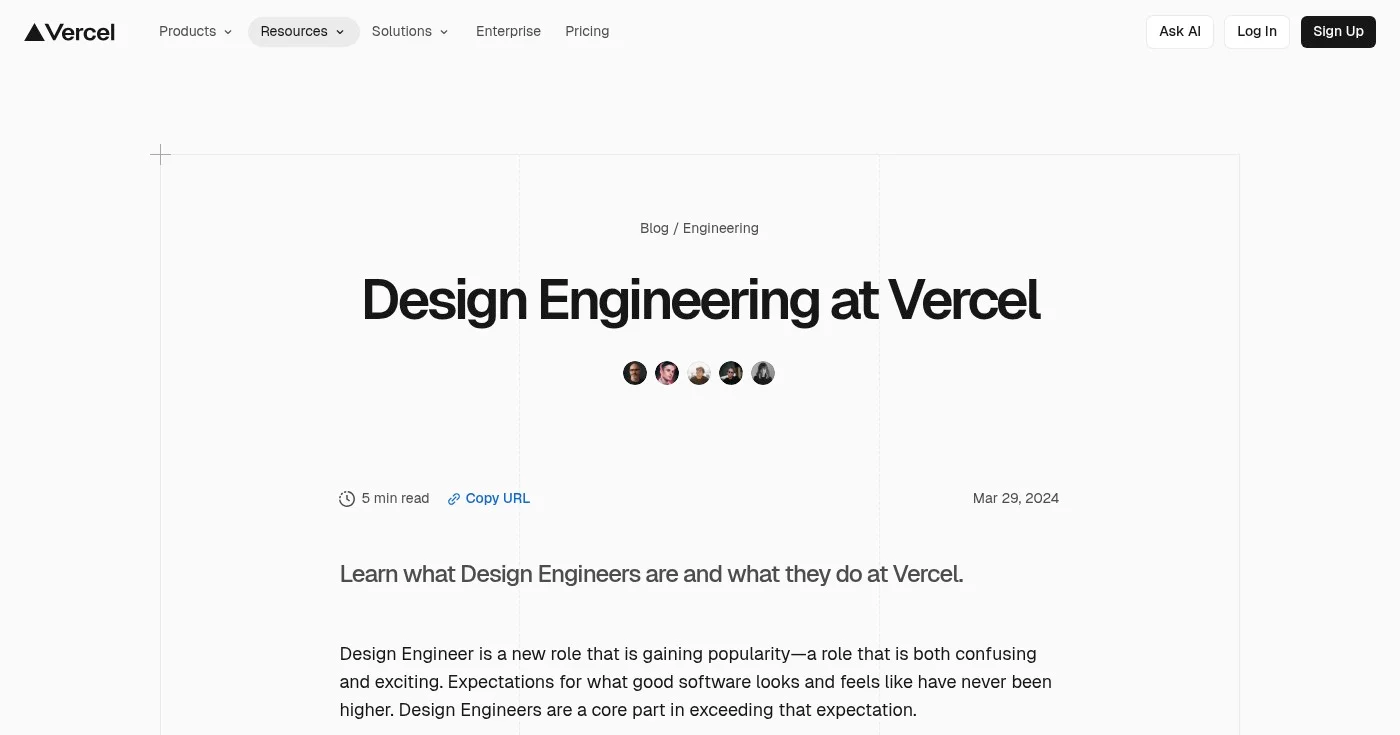
At Vercel, design engineers don't receive a completed handoff. Instead, a designer sketches the start and iterates with a design engineer in Figma or code to produce the final design. The design engineer consults on:
The team works across branding, marketing, product development, and the internal design system. Every area of the product benefits from design engineering involvement.
The frontier of design engineering has moved into AI-native products.
In a March 2026 profile, Flora Guo (formerly Vercel, now founding design engineer at Paradigm, an AI startup) describes using Claude Code as an active design tool, not just a code generator.
Steve Schoger, designer and Tailwind partner, uses the same workflow: iterate on UI with AI as a collaborator, not a shortcut.
The shift reframes what a design engineer's toolkit looks like. It's no longer just Figma plus React. It's Figma plus AI-assisted code iteration plus design tokens as a live API.
Tool | Best For | Free Plan |
|---|---|---|
Design, collaboration, and increasingly live design system API | Yes | |
Component-based UI development | Yes (open source) | |
Utility-first styling that maps to design tokens | Yes (open source) | |
Component documentation and visual testing | Yes (open source) | |
Production animations in React | Yes (limited) | |
Visual regression testing for design systems | Yes (limited) | |
AI-assisted UI iteration | Yes (limited) |
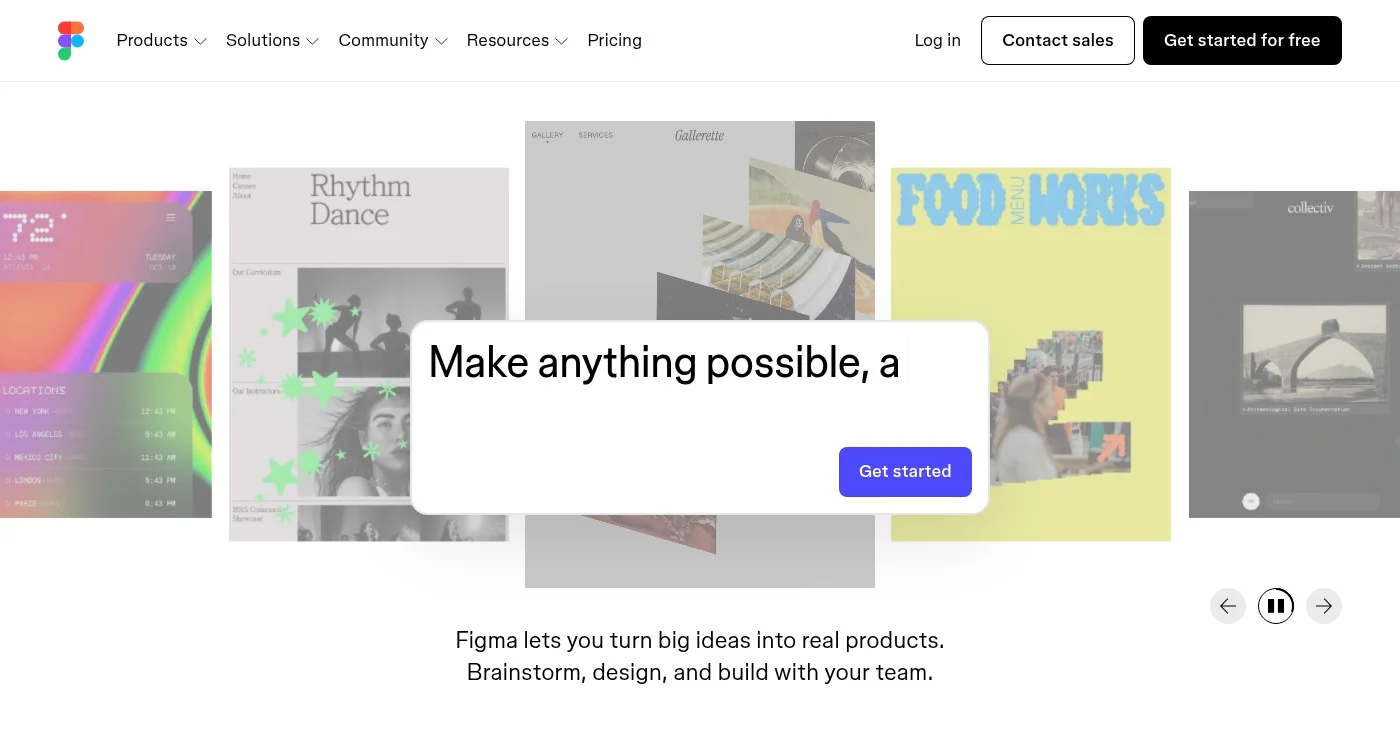
The designengineer.xyz toolkit offers free utilities specifically built for design engineers: framework converters for React/Vue/Svelte/Astro, spring physics visualizers, token naming generators, corner radius calculators, and easing curve designers.
The most significant tool shift in 2026 is treating Figma as an API.
Figma Console MCP by TJ Pitre connects AI assistants to Figma as a live, queryable design system.
You can read design tokens, inspect components, check design-to-code parity, and run audits via natural language in Claude or Cursor. Design and code stop being separate silos. They become two sources of context that AI can reason over simultaneously.
The two roles are often confused, especially at early-stage companies. Here's where they differ:
Dimension | Design Engineer | Product Engineer |
|---|---|---|
Focus | Visual, interactive quality | Broad functionality and features |
Design skills | Primary emphasis | Variable exposure |
Workflow | Close to design team, enters process early | Broader engineering scope |
Output | Functional prototypes, implemented UI | Core product functionality |
When hired | Seed to Series A | Early stage |
Paraform describes the case clearly: products designed by one team and implemented by another often feel "off."
Unless both teams work tightly together, design intent bleeds out during implementation. A design engineer who can create interactions in code captures both the original design intent and the engineering specifications simultaneously.
The two roles complement each other rather than duplicate.
A product engineer builds the feature. A design engineer makes sure the feature feels right, handles edge cases gracefully, and is built on a consistent component system that scales.
The most common mistake is running design to completion before engineering starts. This is the handoff trap.
It creates gaps in edge case handling, introduces inconsistencies, and produces a final product that subtly diverges from the original intent. Design engineers fix this by overlapping phases.
Building a polished button component without thinking about how a change to that button ripples through 40 other components is component-level thinking, not systems-level thinking.
Paraform identifies "thinking in systems, not components" as the most critical trait distinguishing good design engineers from great ones.
A design system that isn't maintained as a living codebase accumulates design debt.
Per Design Systems Collective, the framing shift matters: treating your design system as an API, not a static document, changes how you maintain, version, and extend it.
Retrofitting accessibility onto a complete design system is significantly more expensive than building it in from the start.
Vercel includes a11y (inclusive input modes, assistive technology support, user preference respecting) as a core care area, not a checklist item at the end.
Creating 50+ design artifacts for all possible responsive states of a single component is a sign that design engineering is missing from the team.
Paraform notes that design engineers reduce artifact overhead because they can quickly move from wireframe to mockup to prototype in code without exhaustive documentation for every state.
Most design engineers arrive at the role through one of three paths, all of which involve dual-classing across design and engineering disciplines.
If you're a product or UI designer, the priority is learning the front-end fundamentals that connect your Figma work to the browser. Start with HTML and CSS: understanding how the cascade, the box model, and layout systems like Flexbox and Grid work will immediately change how you design. Then learn JavaScript and a component framework. React is the default choice for most design engineering roles.
The goal isn't to replace engineers. It's to prototype interactions in code, which is faster and more accurate than rebuilding them from Figma. jux.io describes this as "breaking away from the 'designers know code but don't code' mentality" and delivering production-ready code in specific areas.
If you come from engineering, the gap to close is visual judgment. Start with typography fundamentals: type scale, line height, letter spacing, and how type creates hierarchy. Then study spacing systems (4pt or 8pt grids), color theory, and contrast ratios for accessibility.
The designengineer.xyz toolkit is specifically built for this direction: it teaches design concepts through tools (token naming systems, spring animation calculators, corner radius harmonics) that connect directly to code. Vercel's team describes design engineers as people with "a wide array of skills and a lot of curiosity" who "constantly experiment with new tools and mediums."
For career switchers or students, the designengineer.xyz course and the Design Engineering Handbook are the closest things to a structured curriculum. Both teach the disciplines together: you see how design decisions translate directly to implementation and vice versa, without a handoff gap between learning one side and then the other.
Build real design system components and publish them. A publicly accessible Storybook with documented, accessible React components demonstrates the core output of a design engineer better than any portfolio case study. Contribute to open-source design systems. Clone and improve the component systems from Linear or Vercel as exercises.
Design engineers are among the most sought-after hybrid roles in software. Built In 2026 salary data shows:
Companies actively hiring design engineers include Vercel, Linear, Replit, Ramp, and Braze, according to Paraform.
The talent pool is still smaller than traditional design or engineering roles. jux.io notes that most roles are targeted at experienced professionals, but the skill set is new enough that the pool isn't saturated. That creates real opportunity for designers and engineers crossing into the adjacent discipline.
Paraform identifies four signals that a team is ready for a design engineer:
Hardware startups hire hardware design engineers at inception. Software startups typically wait until post-Series A. Paraform argues software companies should hire earlier, taking the same view hardware companies have taken for decades: design engineering is an investment in product quality, not a luxury for later.
Design engineering closes the gap between what's designed and what ships. It does this by making one person responsible for both sides of that gap: the design intent and the implementation quality.
The discipline is still maturing. Most design engineers learn by dual-classing, building design and engineering skills in parallel rather than through a formal curriculum.
Tools like Claude Code and Figma MCP are reshaping the workflow in real time. The organizations that invest in design engineering early tend to ship better products with less waste in the process.
If you're a designer looking to add engineering depth, start with HTML, CSS, and React fundamentals, then study how Vercel and Linear build their component systems. If you're an engineer looking to add design depth, start with typography and spacing systems, then practice in Figma until your UI instincts catch up with your code instincts.
The role is demanding precisely because it spans two disciplines. That's also what makes it valuable.
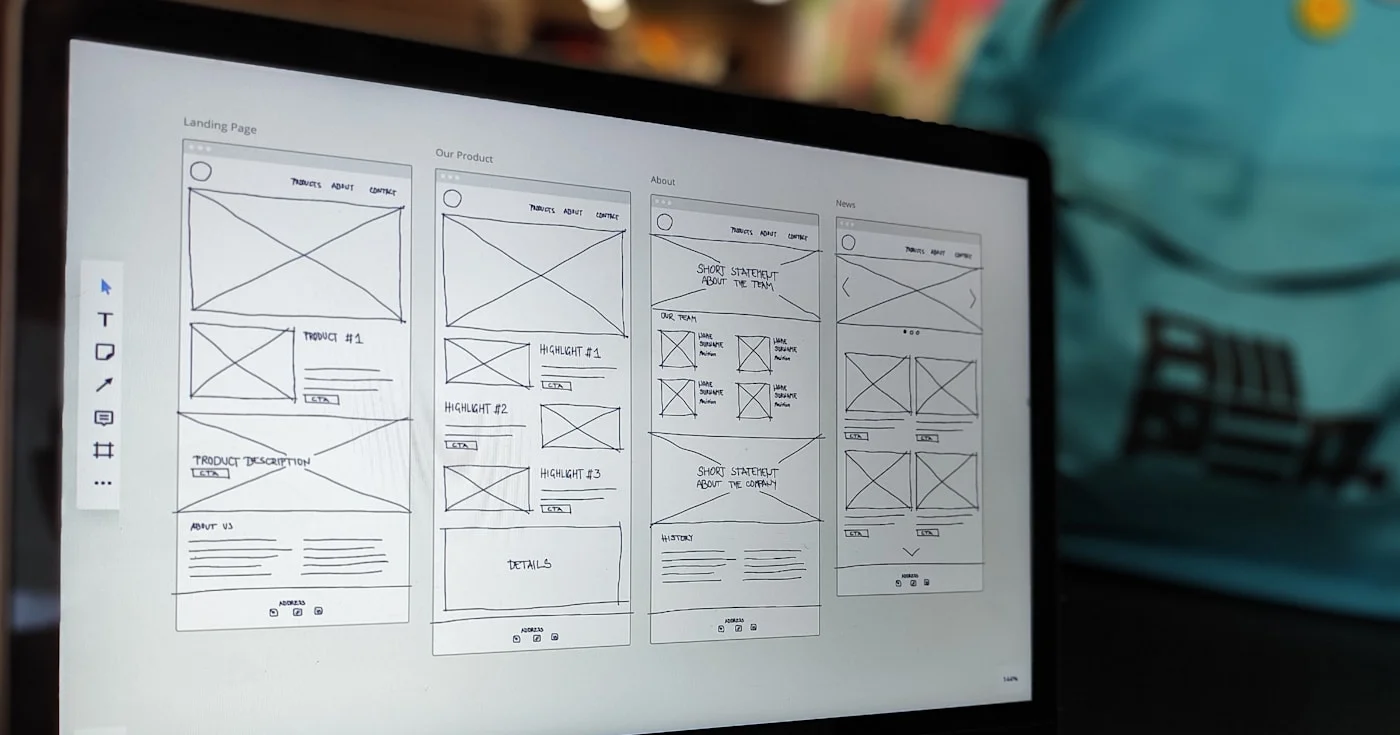
Web accessibility for product teams: W3C POUR, ADA Title II vs Title III vs the EAA, overlay liability, and an 8-step start with named owners.
Visual identity is the complete set of visual elements that communicate a brand personality. This guide covers the recognition stack, 5-phase build process, dar

Master email design with this complete guide. Learn the key elements, best practices, layout principles, responsive techniques, accessibility, and the best tool
